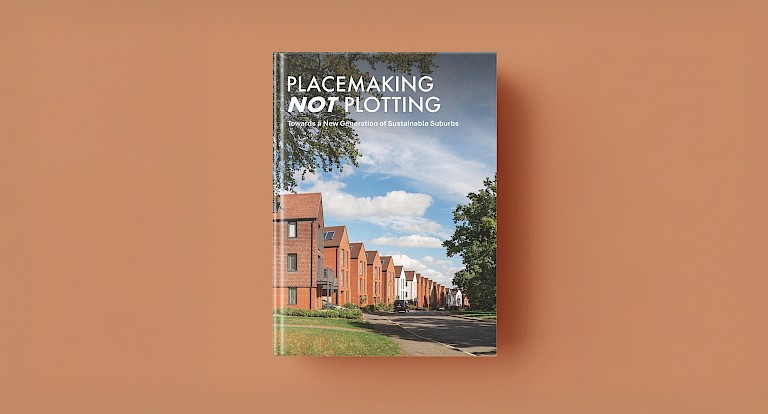
The government has set an ambitious target of 1.5 million new homes to be built in the life of this five-year parliament. It wishes the legacy of this programme to be well-designed, sustainable neighbourhoods meeting the needs of human wellbeing, whilst also enriching the natural environment.
However, there is widespread disquiet that the housebuilding industry may not have the ambition, and willingness to embrace change, required to deliver both the quality and the quantity of homes to which government aspires. This is especially the case with the lower density urban extensions, typically on greenfield sites, which will continue to provide a large proportion of new homes nationally.
National planning policy already asserts that poor quality design should not be allowed. In this report, a group of four architects specialising in housing and placemaking and a former Special Advisor to the House of Lords Built Environment Sector go further. They explain how the current planning system can be adapted to set a threshold for good quality urban design, with a quid pro quo for compliant housebuilders that speeds up the planning system. The outcome would be better quality design leading to more efficient use of land and an increase in supply.
This report argues that small adjustments to the existing planning process would help to achieve a step-change in the delivery of more and better homes, delivering improved compliance with the revised NDG and NMDC. The facing page shows a summary of our recommendations.
Application of these recommendations will deliver more efficient use of land as well as a faster approvals process and higher standards of urban design. The outcome should be a new generation of street-based urbanism and a new model for sustainable suburban development – landscape-rich, biodiverse, properly composed, mixed use, accommodating the demand for cars, but not allowing them to dominate.